
Life at the Speed of Light
Written by Isla Madden
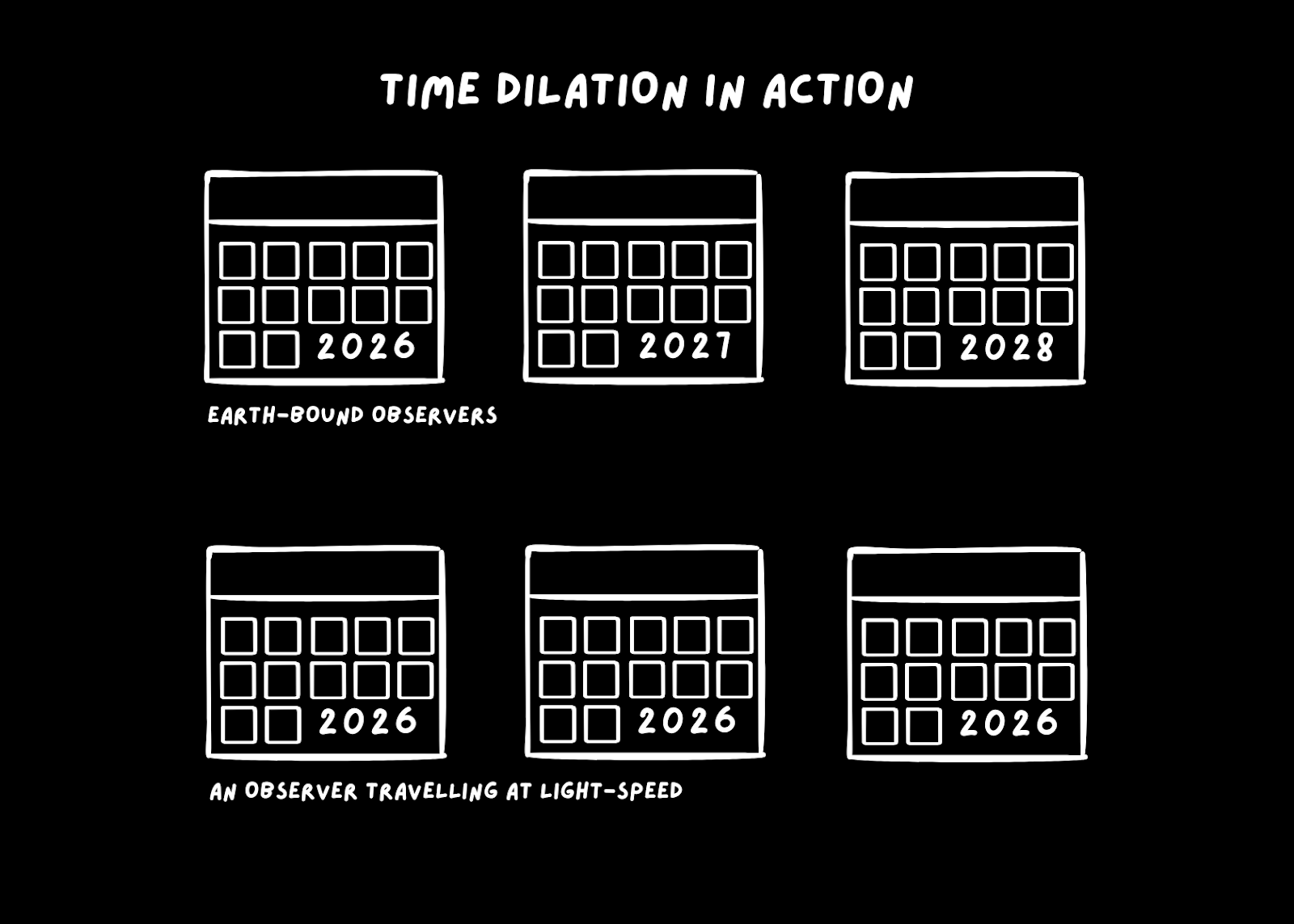
The speed of light is the fastest possible speed in the Universe. At a speed of approximately 300,000 kilometers per second, this is the rate at which light and all electromagnetic energy travel through space. Nothing with mass can reach or exceed this speed, making it a fundamental limit that shapes how time and space behave. Time is not static; at extreme velocities, its passage depends on the observer’s frame of reference, with motion altering how quickly it is experienced.
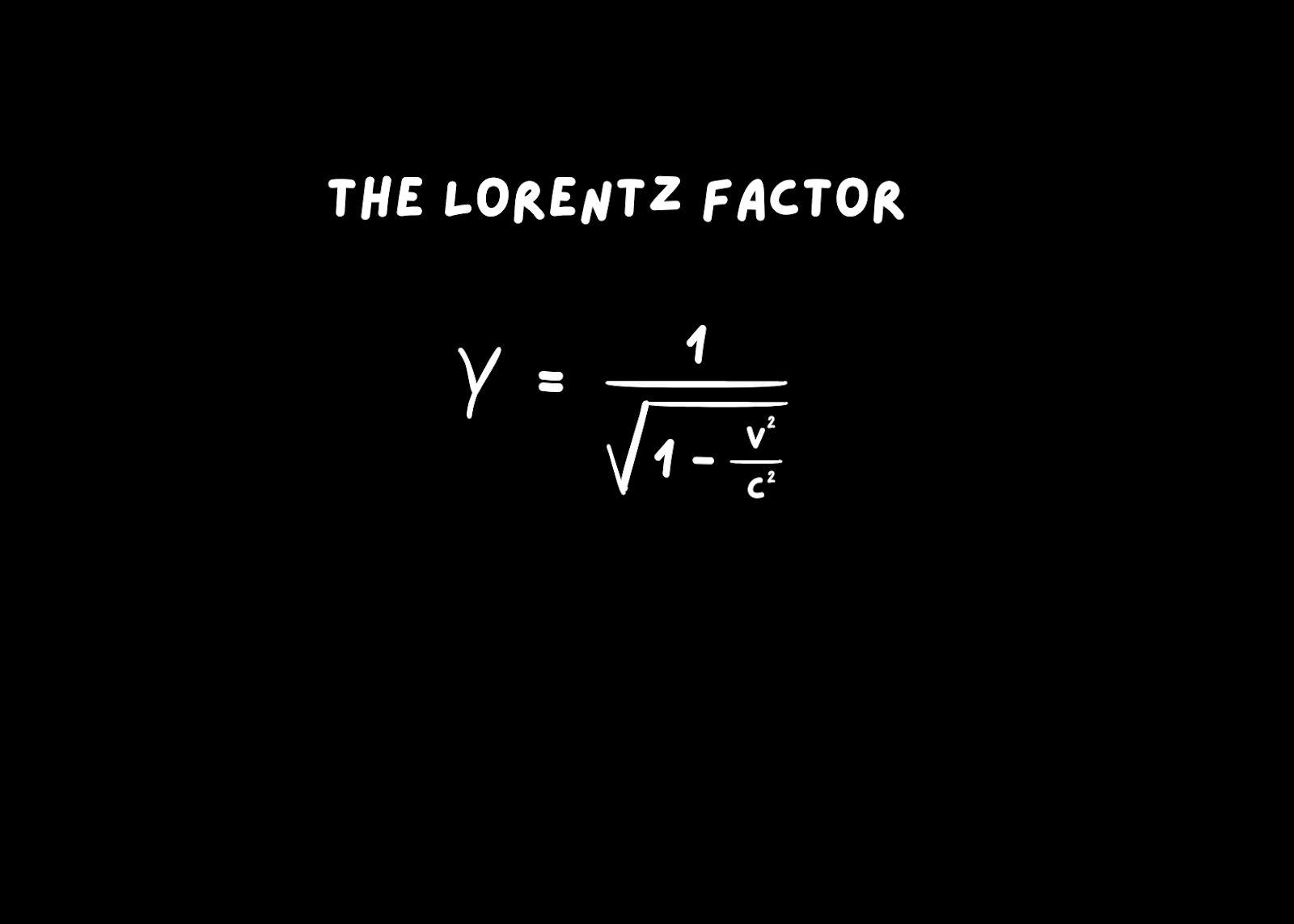
Imagine stepping aboard a spacecraft that can approach the speed of light. As the vessel accelerates, time begins to pass more slowly relative to an observer at rest, while distances in the direction of motion contract. This behaviour is described by the Lorentz factor, which increases rapidly as velocity nears light speed, meaning even small gains in speed produce dramatic relativistic effects. In essence, it quantifies the divergence between the traveler’s experience and that of a stationary observer.
The traveler’s elapsed time is equal to Earth’s elapsed time divided by the Lorentz factor. Distances in the direction of motion contract by result of a phenomenon known as length contraction. To the spacecraft passengers, stars and galaxies ahead appear compressed.
Time dilation is an effect of Einstein’s special relativity. The fourth dimension is not absolute. On Earth, clocks tick in unison, our experience of seconds and years synchronised by biology and rotation. In a near-light-speed vessel, this rhythm fractures. Decades may pass for observers on Earth while the traveler ages only a handful of years. Time becomes personal, dependent on perspective, motion, and the structure of spacetime itself.
Inside the spacecraft, lived experience remains ordinary. Heartbeats, thoughts, and the passage of artificial day and night continue in their familiar cadence. Equations capture cosmic precision while experience preserves continuity, creating a duality in which the Universe is both accessible and unknowable.
The implications of relativity extend beyond physics. A journey to Alpha Centauri, brief to the traveler, may span generations for those left behind. Friends, families, civilisations, even the solar system itself, move forward in time inaccessible to the traveler. Messages home become representations of a past reality. The traveler exists in one frame of time while the Universe continues in another. This is not merely a question of speed. It is a confrontation with the structure of reality and the limits of human intuition.
In this tension between subjective and objective time, the Universe exposes the fragility of perception. Experience cannot encompass cosmic truth. To travel at light speed is to encounter reality in a form not built for the human mind, to witness that the world unfolds independently, continuing without regard for our sense of continuity.