
The Higher Purpose of Space Exploration
Written by Isla Madden
Humanity holds an unwavering curiosity toward outer space, and this fascination with the final frontier reflects the nature of our pioneering spirit. Beyond exoplanet discoveries or the detection of chemical signatures for life on distant worlds, our exploration of space offers an important perspective. Our understanding of the cosmos is dynamic, mirroring the nature of our Universe’s constant evolution across time. Theoretical models shift as technological advancements expand our observational capabilities. As the hand of civilization extends its reach beyond the planet we call home, we may be humbled and inspired by the scale of our place among the vast Universe.
We have long looked to the stars in search of life among the vast unknown. Beyond science fiction and tales of visitors from other worlds, modern science provides tangible methods for detecting signs that could indicate biological life beyond Earth. Are we driven by a deep-seated human need for connection, or are we simply fuelling an insatiable desire to pioneer an extraterrestrial discovery? Perhaps it is the not-knowing that motions us forward, urging humanity to push the boundaries of understanding. In reaching outward, we confront what it means to exist in a Universe that may be lonelier than we have ever imagined.
The European Space Agency’s Gaia mission has transformed our understanding of the Milky Way, mapping more than a billion stars. The telescope detects the subtle motions of starlight, where the gravitational pull of an orbiting planet causes the slight wobble of its host star. Astrometry reveals the interactions between celestial bodies, aiding the discovery of exoplanets and identifying potential worlds with conditions similar to our own.
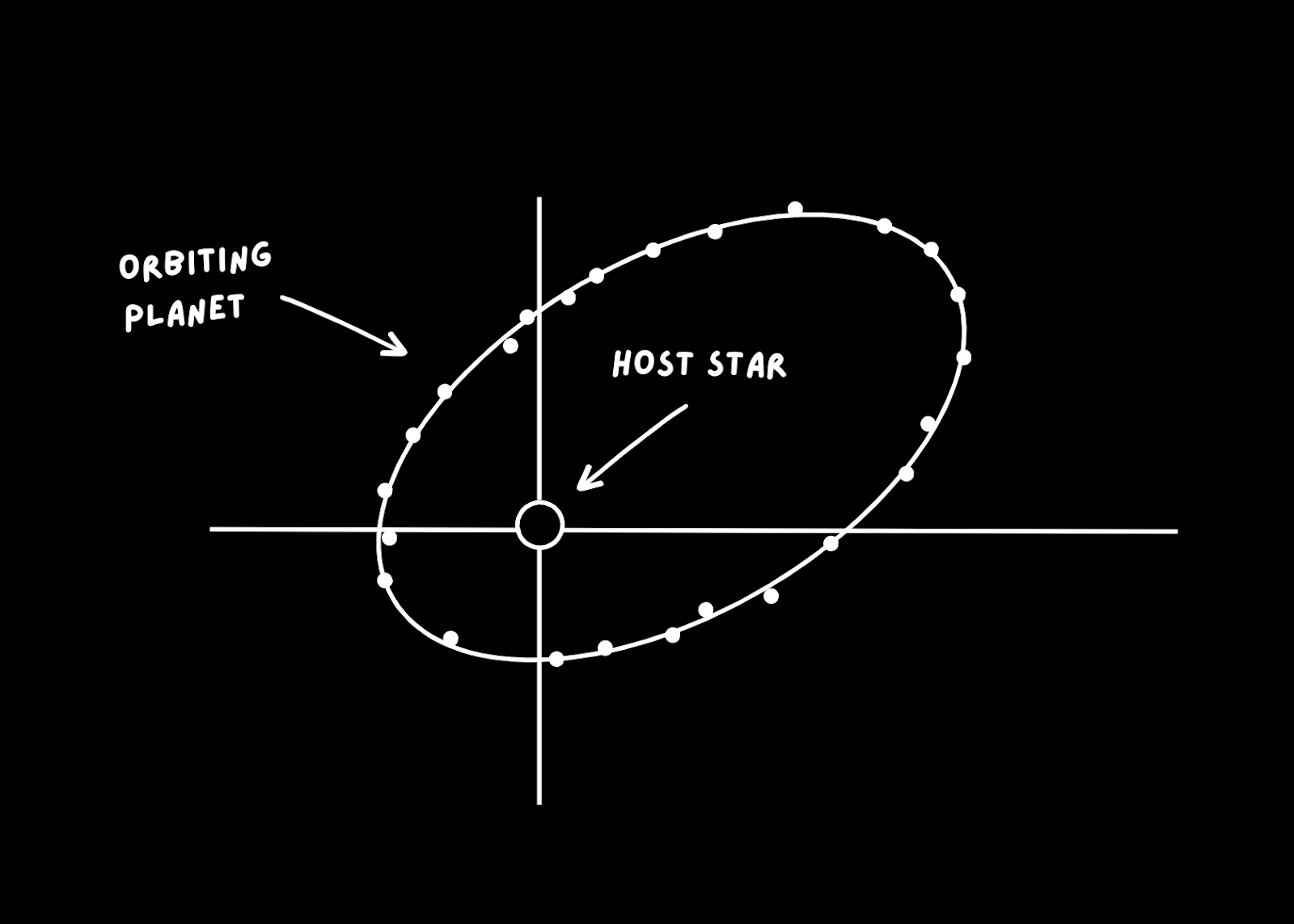
Gaia expands the cosmic census and deepens our understanding of how planetary systems form, migrate, and evolve across the vastness of the Universe. This exploration enriches our awareness of other solar systems and enhances our appreciation for our own. At the beginning of time, the observable Universe expanded out of what is often described as a singularity: “The creation of a thousand forests is in one acorn… the universe is a process of becoming, ever unfolding” (Ralph Waldo Emerson). Space exploration is not simply the passive act of witnessing our Universe’s unfolding; it is an act of faith in possibility, offering the recognition that the unknown is not something to be feared, but something we may grow into.